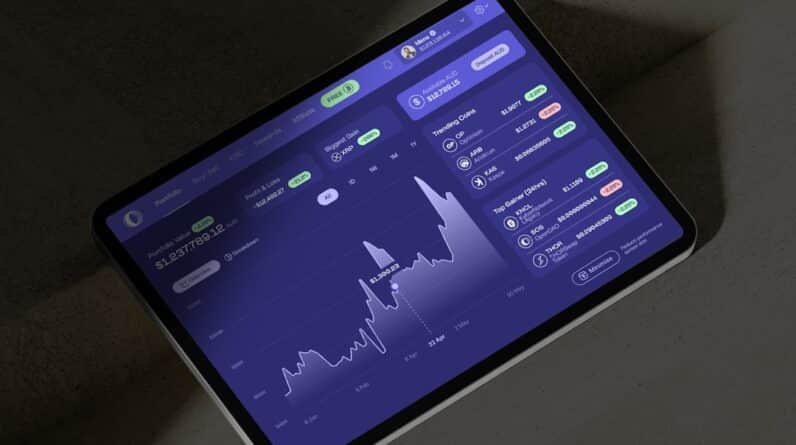
As you embark on your journey into the world of cryptocurrency trading, understanding the basics of cryptocurrency charts is essential. These charts serve as visual representations of price movements over time, allowing you to analyze trends and make informed decisions. At their core, cryptocurrency charts display the price of a digital asset against time, providing a snapshot of its performance.
By familiarizing yourself with these charts, you can gain insights into market behavior and identify potential trading opportunities. Cryptocurrency charts come in various forms, each offering unique perspectives on price movements. The most common types include line charts, bar charts, and candlestick charts.
Each type has its advantages and disadvantages, but they all share the same fundamental purpose: to help you visualize price data. As you delve deeper into the world of cryptocurrency, you’ll find that mastering these charts is crucial for developing effective trading strategies and understanding market dynamics.
Key Takeaways
- Cryptocurrency charts provide visual representations of price movements and are essential for technical analysis.
- There are different types of cryptocurrency charts, including line charts, bar charts, and candlestick charts, each offering unique insights into price movements.
- Price and time scales on cryptocurrency charts help traders understand the historical price movements and forecast future price trends.
- Candlestick patterns on cryptocurrency charts, such as doji, hammer, and engulfing patterns, can indicate potential trend reversals or continuations.
- Technical indicators, such as moving averages, RSI, and MACD, can be used to interpret cryptocurrency charts and make informed trading decisions.
Identifying Different Types of Cryptocurrency Charts
When you start exploring cryptocurrency charts, you’ll encounter several types that cater to different analytical needs. Line charts are perhaps the simplest form, displaying a continuous line that connects closing prices over a specified period. This type of chart is particularly useful for identifying long-term trends, as it smooths out fluctuations and provides a clear overview of price movements.
However, line charts may lack the detail needed for short-term trading decisions. On the other hand, bar charts offer more information by displaying the open, high, low, and close prices for a specific time frame. Each bar represents a set period, such as an hour or a day, and provides a more comprehensive view of price action.
This added detail can help you identify potential reversals or continuations in trends. Candlestick charts take this a step further by using colored “candles” to represent price movements within a given timeframe. Each candlestick provides information about the opening and closing prices, as well as the high and low for that period.
By learning to read these different types of charts, you can better understand market sentiment and make more informed trading decisions.
Reading Price and Time Scales on Cryptocurrency Charts

To effectively analyze cryptocurrency charts, you must become proficient in reading both price and time scales. The price scale typically runs vertically along the right side of the chart, indicating the value of the cryptocurrency being analyzed. Understanding how to interpret this scale is crucial for determining entry and exit points in your trades.
As you observe price movements, pay attention to significant levels where the price has previously reversed or consolidated; these levels can provide valuable insights into future price behavior. The time scale, usually displayed horizontally along the bottom of the chart, represents the duration over which price movements are analyzed. Depending on your trading strategy—whether you’re a day trader or a long-term investor—you may choose different time frames to analyze.
Shorter time frames can reveal rapid price fluctuations and opportunities for quick trades, while longer time frames can help you identify overarching trends and market cycles. By mastering both scales, you can develop a more nuanced understanding of market dynamics and enhance your trading strategies.
Analyzing Candlestick Patterns on Cryptocurrency Charts
Candlestick patterns are an essential aspect of technical analysis in cryptocurrency trading. Each candlestick provides a wealth of information about market sentiment during a specific time frame. By learning to recognize various candlestick patterns, you can gain insights into potential price movements and reversals.
For instance, a bullish engulfing pattern occurs when a small bearish candle is followed by a larger bullish candle that completely engulfs it. This pattern often signals a potential reversal from a downtrend to an uptrend. Conversely, bearish patterns can also indicate potential downturns in price.
A shooting star candlestick, characterized by a small body at the lower end of the range with a long upper shadow, suggests that buyers pushed prices higher but were ultimately unable to maintain momentum. Recognizing these patterns can help you make more informed decisions about when to enter or exit trades. As you become more familiar with candlestick patterns, you’ll find that they can serve as powerful tools for predicting market behavior and enhancing your overall trading strategy.
Using Technical Indicators to Interpret Cryptocurrency Charts
In addition to candlestick patterns, technical indicators play a vital role in interpreting cryptocurrency charts. These mathematical calculations are derived from price and volume data and can help you identify trends, momentum, volatility, and market strength. Some popular technical indicators include moving averages, Relative Strength Index (RSI), and Bollinger Bands.
By incorporating these indicators into your analysis, you can gain deeper insights into market conditions and make more informed trading decisions. For example, moving averages smooth out price data over a specified period, allowing you to identify trends more easily. A simple moving average (SMA) calculates the average price over a set number of periods, while an exponential moving average (EMA) gives more weight to recent prices.
The RSI is another valuable tool that measures the speed and change of price movements, helping you identify overbought or oversold conditions in the market. By combining these technical indicators with your chart analysis, you can develop a more comprehensive understanding of market dynamics and enhance your trading strategies.
Recognizing Support and Resistance Levels on Cryptocurrency Charts

Support and resistance levels are critical concepts in technical analysis that can significantly impact your trading decisions. Support refers to a price level where buying interest is strong enough to prevent the price from falling further. Conversely, resistance is a level where selling interest is strong enough to prevent the price from rising above it.
Recognizing these levels on cryptocurrency charts can help you identify potential entry and exit points for your trades. To identify support and resistance levels, look for historical price points where the asset has previously reversed direction or consolidated. These levels often act as psychological barriers for traders, leading to increased buying or selling activity when approached.
Additionally, as prices break through these levels, they can become new support or resistance zones in future price movements. By incorporating support and resistance analysis into your trading strategy, you can make more informed decisions about when to enter or exit positions.
Applying Trend Lines and Chart Patterns in Cryptocurrency Analysis
Trend lines are another essential tool for analyzing cryptocurrency charts. By connecting significant highs or lows on the chart, you can visually represent the direction of the market trend—whether it’s upward (bullish), downward (bearish), or sideways (neutral). Drawing trend lines helps you identify potential breakout points or reversals in price action.
When prices approach a trend line, they may either bounce off it or break through it, providing valuable insights into future market behavior. In addition to trend lines, various chart patterns can also aid in your analysis. Patterns such as head and shoulders, triangles, and flags can signal potential reversals or continuations in trends.
For instance, an ascending triangle pattern often indicates bullish sentiment as buyers push prices higher while sellers maintain resistance at a certain level. Recognizing these patterns allows you to anticipate potential price movements and adjust your trading strategy accordingly.
Utilizing Charting Tools and Resources for Cryptocurrency Trading
As you navigate the world of cryptocurrency trading, utilizing charting tools and resources can significantly enhance your analysis and decision-making process. Many online platforms offer advanced charting features that allow you to customize your analysis with various indicators, drawing tools, and time frames. Familiarizing yourself with these tools will enable you to create tailored charts that suit your trading style.
Additionally, numerous educational resources are available online to help you deepen your understanding of cryptocurrency charts and technical analysis. From webinars and tutorials to forums and articles, these resources can provide valuable insights into market trends and trading strategies. By continuously educating yourself and practicing your skills with charting tools, you’ll be better equipped to navigate the complexities of cryptocurrency trading and make informed decisions that align with your financial goals.
In conclusion, mastering cryptocurrency charts is an essential skill for any trader looking to succeed in this dynamic market. By understanding the basics of chart types, reading price and time scales, analyzing candlestick patterns, utilizing technical indicators, recognizing support and resistance levels, applying trend lines and chart patterns, and leveraging charting tools and resources, you can develop a comprehensive approach to cryptocurrency analysis that enhances your trading strategies and decision-making processes. As you continue your journey in cryptocurrency trading, remember that practice and continuous learning are key components to achieving success in this ever-evolving landscape.
FAQs
What is a cryptocurrency chart?
A cryptocurrency chart is a visual representation of the price movement of a particular cryptocurrency over a specific period of time. It typically includes information such as the opening price, closing price, highest price, lowest price, and trading volume.
What are the common types of cryptocurrency charts?
The common types of cryptocurrency charts include line charts, bar charts, candlestick charts, and area charts. Each type of chart provides different levels of detail and can be used to analyze price movements in different ways.
How do I interpret a cryptocurrency chart?
To interpret a cryptocurrency chart, you can look at the price levels, patterns, and trends over time. This can help you make informed decisions about buying, selling, or holding a particular cryptocurrency.
What are some key indicators to look for on a cryptocurrency chart?
Some key indicators to look for on a cryptocurrency chart include support and resistance levels, moving averages, volume, and various technical indicators such as RSI (Relative Strength Index) and MACD (Moving Average Convergence Divergence).
Where can I find cryptocurrency charts?
Cryptocurrency charts can be found on various financial websites, cryptocurrency exchanges, and trading platforms. There are also specialized charting platforms and tools that provide more advanced features for analyzing cryptocurrency price movements.