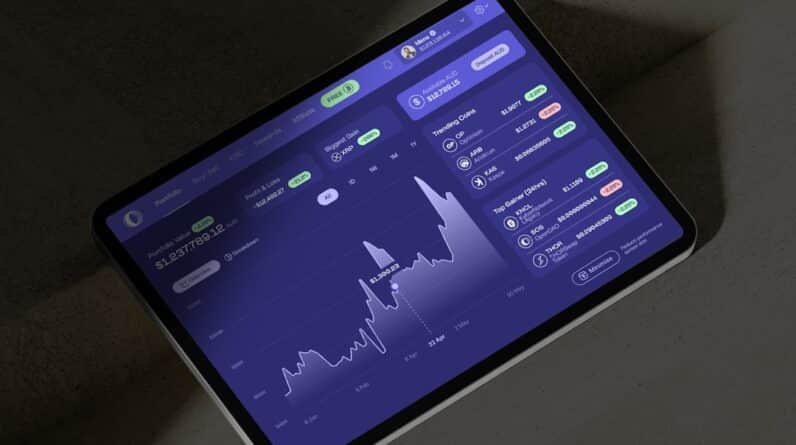
Decentralized Finance, commonly referred to as DeFi, represents a revolutionary shift in the financial landscape. At its core, DeFi aims to recreate traditional financial systems—such as lending, borrowing, and trading—using blockchain technology. This innovative approach eliminates the need for intermediaries like banks and brokers, allowing users to engage directly with financial services.
By leveraging smart contracts, which are self-executing contracts with the terms of the agreement directly written into code, DeFi platforms can operate autonomously and transparently. This not only enhances efficiency but also reduces costs associated with traditional financial transactions. As you delve deeper into DeFi, you will discover that it encompasses a wide range of financial services.
From decentralized exchanges (DEXs) that facilitate peer-to-peer trading of cryptocurrencies to lending platforms that allow users to earn interest on their digital assets, the possibilities are vast. The ethos of DeFi is rooted in inclusivity and accessibility; anyone with an internet connection can participate in these financial activities without the barriers often imposed by traditional banking systems. This democratization of finance is one of the most compelling aspects of DeFi, as it empowers individuals across the globe to take control of their financial futures.
Key Takeaways
- DeFi refers to a financial system built on public blockchains that does not rely on traditional financial intermediaries.
- Cryptocurrencies are digital or virtual currencies that use cryptography for security and operate independently of a central authority.
- DeFi and cryptocurrencies are closely related, as many DeFi platforms and projects are built on blockchain networks that also support cryptocurrencies.
- Advantages of DeFi include accessibility, transparency, and the potential for financial inclusion for individuals who are underserved by traditional financial systems.
- Challenges and risks of DeFi include security vulnerabilities, regulatory uncertainty, and the potential for smart contract bugs or exploits.
The Basics of Cryptocurrencies
To fully grasp the concept of DeFi, it is essential to understand cryptocurrencies, which serve as the backbone of this decentralized ecosystem. Cryptocurrencies are digital or virtual currencies that use cryptography for security, making them difficult to counterfeit. The most well-known cryptocurrency, Bitcoin, was introduced in 2009 as a response to the global financial crisis, aiming to provide a decentralized alternative to traditional currencies.
Since then, thousands of cryptocurrencies have emerged, each with unique features and use cases. You may find it interesting that cryptocurrencies operate on blockchain technology—a distributed ledger that records all transactions across a network of computers. This technology ensures transparency and security, as every transaction is verified by network participants (or nodes) before being added to the blockchain.
Unlike traditional currencies issued by governments, cryptocurrencies are typically decentralized and not controlled by any single entity. This characteristic not only enhances security but also allows for greater innovation within the financial sector, paving the way for the development of DeFi applications.
The Relationship Between DeFi and Cryptocurrencies

The relationship between DeFi and cryptocurrencies is symbiotic; one cannot thrive without the other. Cryptocurrencies provide the necessary infrastructure for DeFi applications to function effectively. For instance, most DeFi platforms operate on Ethereum, a blockchain that supports smart contracts and allows developers to create decentralized applications (dApps).
In this context, cryptocurrencies serve as both a medium of exchange and a means of accessing various financial services within the DeFi ecosystem. As you explore this relationship further, you will notice that many DeFi projects utilize specific tokens to facilitate transactions and incentivize user participation. These tokens often represent governance rights, allowing holders to vote on important decisions regarding the platform’s future.
Additionally, they can be used for staking or liquidity provision, enabling users to earn rewards while contributing to the platform’s overall health. This interconnectedness between cryptocurrencies and DeFi not only enhances user engagement but also fosters a vibrant community of investors and developers dedicated to pushing the boundaries of what is possible in finance.
Advantages of Decentralized Finance
One of the most significant advantages of decentralized finance is its ability to provide financial services without the need for intermediaries. This reduction in reliance on traditional institutions leads to lower fees and faster transaction times. You may find it appealing that users can lend or borrow assets directly from one another, often at more favorable rates than those offered by banks.
Furthermore, DeFi platforms operate 24/7, allowing users to access their funds and engage in transactions at any time, unlike traditional banks that have set operating hours. Another key benefit of DeFi is its inherent transparency. Since all transactions are recorded on a public blockchain, users can easily verify the integrity of the system.
This level of transparency fosters trust among participants and reduces the likelihood of fraud or manipulation. Additionally, DeFi promotes financial inclusion by providing access to services for individuals who may be unbanked or underbanked. With just an internet connection and a digital wallet, anyone can participate in the global economy, breaking down barriers that have historically excluded many from accessing essential financial services.
Challenges and Risks of Decentralized Finance
Despite its numerous advantages, decentralized finance is not without its challenges and risks. One major concern is the potential for smart contract vulnerabilities. While smart contracts are designed to execute automatically based on predefined conditions, they can also contain bugs or flaws that malicious actors may exploit.
As a user, you must exercise caution when interacting with DeFi platforms and conduct thorough research before investing your assets. Another significant risk associated with DeFi is market volatility. The cryptocurrency market is known for its price fluctuations, which can lead to sudden losses for investors.
In addition, many DeFi projects are relatively new and may lack the stability and track record of traditional financial institutions. As you navigate this space, it is crucial to remain aware of these risks and consider diversifying your investments to mitigate potential losses.
The Role of Smart Contracts in DeFi

Streamlining Processes and Reducing Costs
When certain conditions are met, such as a borrower providing collateral, smart contracts automatically execute transactions without human intervention. This not only streamlines processes but also reduces costs associated with traditional financial services.
Enabling Advanced Functionality
As you explore various DeFi platforms, you will notice that smart contracts enable a wide range of functionalities. For instance, they facilitate automated market-making on decentralized exchanges, allowing users to trade assets without relying on centralized order books.
Enhancing Efficiency and Responsiveness
Additionally, smart contracts govern lending protocols by determining interest rates based on supply and demand dynamics. This level of automation enhances efficiency and creates a more responsive financial ecosystem that adapts to user needs in real-time.
Examples of DeFi Platforms and Projects
There are numerous DeFi platforms and projects that exemplify the potential of decentralized finance. One prominent example is Uniswap, a decentralized exchange that allows users to trade cryptocurrencies directly from their wallets without relying on a centralized authority. Uniswap utilizes an automated market-making model that enables users to provide liquidity in exchange for fees generated from trades.
This innovative approach has made it one of the most popular DEXs in the DeFi space. Another noteworthy project is Aave, a decentralized lending platform that allows users to borrow and lend various cryptocurrencies without intermediaries. Aave offers unique features such as flash loans—unsecured loans that must be repaid within a single transaction block—allowing users to access capital quickly for arbitrage opportunities or other purposes.
These examples illustrate how DeFi platforms are pushing the boundaries of traditional finance by offering innovative solutions that cater to diverse user needs.
The Future of Decentralized Finance and Cryptocurrencies
As you look ahead, the future of decentralized finance and cryptocurrencies appears promising yet uncertain. The rapid growth of DeFi has attracted significant attention from investors, regulators, and traditional financial institutions alike. While this increased interest may lead to greater adoption and innovation within the space, it also raises questions about regulation and compliance.
As governments around the world grapple with how to approach this new financial paradigm, you may witness changes that could shape the future landscape of DeFi. Moreover, advancements in technology will likely continue to drive the evolution of decentralized finance. As scalability solutions such as layer-2 protocols gain traction, you can expect faster transaction speeds and lower fees on DeFi platforms.
Additionally, interoperability between different blockchains may enhance user experience by allowing seamless asset transfers across various networks. Ultimately, as you navigate this dynamic landscape, staying informed about emerging trends and developments will be crucial in harnessing the full potential of decentralized finance and cryptocurrencies in your financial journey.
FAQs
What is Decentralized Finance (DeFi)?
Decentralized Finance (DeFi) refers to a financial system that operates without traditional intermediaries such as banks or financial institutions. It utilizes blockchain technology and smart contracts to provide financial services such as lending, borrowing, trading, and investing in a decentralized manner.
How does DeFi relate to cryptocurrencies?
DeFi relies on cryptocurrencies and blockchain technology to create a decentralized financial ecosystem. Cryptocurrencies serve as the native digital assets that power various DeFi applications and protocols, enabling users to access financial services without the need for traditional financial intermediaries.
What are some examples of DeFi applications?
Examples of DeFi applications include decentralized exchanges (DEXs), lending platforms, liquidity pools, yield farming protocols, and decentralized stablecoins. These applications allow users to trade, lend, borrow, and earn interest on their digital assets in a decentralized and permissionless manner.
What are the benefits of DeFi?
Some of the benefits of DeFi include greater financial inclusion, lower barriers to entry, increased transparency, enhanced security, and the potential for higher returns on investments. DeFi also enables users to have more control over their financial assets and access a wider range of financial services.
What are the risks associated with DeFi?
Risks associated with DeFi include smart contract vulnerabilities, price volatility of cryptocurrencies, potential security breaches, regulatory uncertainty, and the risk of impermanent loss in liquidity pools. It is important for users to conduct thorough research and due diligence before participating in DeFi activities.